
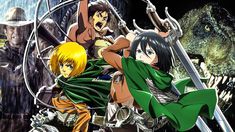
Very few manga series have managed to create a world as oppressive, believable, intense, and emotionally exhausting as Attack on Titan. The story immediately places readers inside a gigantic prison disguised as protection. Massive walls dominate the horizon like cliffs swallowing civilisation. Fear shapes daily life. Soldiers become symbols of sacrifice. Humanity survives while knowing extinction may arrive at any moment. That atmosphere explains why the manga reached audiences far beyond traditional anime fans. Readers often wonder where Hajime Isayama found the ideas behind this universe. The answer is surprisingly complex. The manga combines real historical conflicts, European influences, military ideologies, social fears, political manipulation, Norse mythology, horror cinema, and personal trauma. Many locations inside the story resemble German towns from the nineteenth century. The military structure mirrors historical regimes. Titan behaviour echoes both zombie horror and wartime panic. Even the walls themselves carry symbolic meanings linked to isolationism, fear of outsiders, and authoritarian control.
The deeper someone studies Attack on Titan, the clearer its inspirations become. Some references appear obvious. Others remain hidden beneath symbolism, visual details, character motivations, or political allegories. That layered construction explains why the manga continues generating debates years after its ending. Readers are not simply consuming action scenes involving giants. They are exploring questions about freedom, nationalism, discrimination, inherited hatred, survival, revenge, and the terrifying cost of war. The manga also stands apart because Isayama rarely romanticises violence. Battles feel chaotic rather than heroic. Death arrives brutally. Characters suffer psychological collapse. Entire cities disappear in moments. Humanity resembles a candle flickering inside a storm. That realism did not emerge accidentally. The author openly discussed several real-world influences that shaped the tone and themes of the series. Understanding those inspirations completely changes the reading experience. Scenes that once appeared simple suddenly reveal political meaning, historical parallels, emotional symbolism, or philosophical commentary. Attack on Titan becomes less of a monster manga and more of a reflection of humanity itself.
The European atmosphere behind the manga
One of the most obvious inspirations behind Attack on Titan comes from nineteenth-century Europe, particularly Germany. The architecture inside the manga immediately evokes old European towns filled with stone houses, narrow streets, military districts, churches, marketplaces, and fortified cities. Readers familiar with Germanic regions quickly notice similarities between the fictional setting and real places across Central Europe. Many city names inside the series also carry German origins. Characters such as Eren Yeager, Erwin Smith, Reiner Braun, Annie Leonhart, Bertholdt Hoover, plus countless others reinforce that European identity. Even the military uniforms resemble a fusion of historical German and early industrial-era military clothing. The visual identity creates an atmosphere grounded in realism rather than fantasy.
That realism helped distinguish Attack on Titan from many manga inspired mainly by futuristic Japan or entirely fictional kingdoms. Isayama built a world that feels historical, cold, rigid, disciplined, and socially constrained. The setting almost resembles a society trapped between medieval structures and industrial warfare. Cannons exist. Horses dominate transportation. Firearms appear primitive compared to modern weaponry. Humanity survives through walls rather than technological superiority. The European inspiration also extends into cultural behaviours. Citizens inside the walls live with strict social classes, military hierarchies, political elites, food shortages, territorial anxiety, and fear-driven propaganda. Nobility controls information. The population accepts restrictions in exchange for security. That mirrors several historical European societies shaped by war, famine, and authoritarian influence.
The emotional texture of the manga owes much to this environment. Attack on Titan feels heavy because the world itself looks believable. Streets appear dirty. Buildings look weathered. Uniforms lack glamour. Soldiers resemble exhausted survivors rather than fantasy heroes. The atmosphere almost carries the scent of rain, smoke, iron, and blood. That visual authenticity also explains why collectors often seek detailed statues, posters, clothing, and replicas inspired by the series. Many fans searching for realistic merchandise connected to the manga eventually explore specialised collections through an anime shop focused on darker anime universes with strong visual identity.
The walls themselves may also reflect historical fortified societies. Throughout history, civilisations built enormous defensive barriers against perceived external threats. The Great Wall of China often appears in discussions surrounding the manga’s inspirations, though Isayama never reduced the symbolism to a single reference. The walls in Attack on Titan represent more than physical protection. They symbolise psychological imprisonment, political manipulation, fear of change, plus humanity’s tendency to isolate itself from uncomfortable truths.
The historical conflicts hidden inside Attack on Titan
Many readers initially view Attack on Titan as a survival story involving monsters. Beneath that surface lies a dense network of historical references linked to nationalism, ethnic persecution, warfare, propaganda, and cycles of revenge. Those influences become especially visible during the later arcs of the manga. The relationship between Marley and Eldia strongly resembles several real-world historical conflicts involving imperialism, inherited guilt, ethnic discrimination, and militarised nationalism. Entire populations become judged according to ancestry. Children inherit hatred before understanding history themselves. Governments weaponise fear to maintain unity. Citizens are taught simplified narratives designed to justify violence against outsiders.
Those themes immediately remind many readers of twentieth-century European history. Some parallels evoke the treatment of minority populations during wartime regimes. Armbands worn by Eldians, segregated living zones, inherited shame, systematic propaganda, and racial demonisation clearly draw from historical imagery associated with persecution in Europe. Isayama never created a simple good-versus-evil conflict. Every faction commits atrocities. Every society manipulates history. Every side believes survival justifies violence. That moral ambiguity gives Attack on Titan unusual psychological weight. Readers constantly shift perspectives. Characters once seen as villains suddenly become understandable. Heroes become morally compromised. Entire ideologies collapse. The military structure inside the manga also reflects historical wartime systems:
- Conscription
- Military police
- Propaganda
- Territorial fear
- Authoritarian leadership
- National identity
- Secret intelligence
- Inherited trauma
Those elements create a world shaped less by fantasy adventure and more by political survival. Battles inside the series rarely feel glorious. Soldiers scream, panic, bleed, and die abruptly. Civilians become collateral damage. Victory often creates new hatred rather than peace. Several historians and anime analysts have noted how the manga explores the danger of dehumanisation. Titans initially appear as faceless monsters consuming humans without reason. Later revelations completely transform that perception. Readers discover humanity itself created the nightmare. Fear allowed violence to evolve endlessly across generations.
That narrative structure mirrors real historical cycles where nations justify brutality through fear of the “other”. Attack on Titan repeatedly asks uncomfortable questions. Can violence truly protect freedom? Does revenge ever end conflict? Can societies escape inherited hatred? Those questions elevate the manga beyond traditional action storytelling.
How mythology influenced the Titans themselves?
The Titans may appear unique to modern manga culture, though their roots connect deeply to mythology, folklore, and ancient symbolism. The very term “Titan” originates from Greek mythology, where Titans represented colossal primordial beings existing before the Olympian gods. Those creatures symbolised overwhelming power, chaos, rebellion, and destruction. Attack on Titan reinterprets that concept through horror rather than mythology alone.
The series also contains noticeable influences from Norse mythology. Ymir, one of the most important names in the manga, directly references Ymir from Norse cosmology. In ancient mythology, Ymir was a primordial giant linked to the creation of the world itself. Hajime Isayama adapted that symbolism into the origin story of Titan powers. Many visual elements inside the manga reinforce mythological influence. Gigantic skeletal forms, world-ending transformations, ancestral power transmission, ancient bloodlines, prophetic imagery, and catastrophic rebirth all resemble mythological storytelling structures found across several civilisations.
The symbolism of giant creatures
Gigantic beings have always represented humanity’s fear of losing control. Ancient myths used monsters to embody natural disasters, divine punishment, social collapse, or uncontrollable violence. Titans inside the manga follow that tradition perfectly. They are not elegant fantasy monsters. They look grotesque, unnatural, smiling, distorted, and emotionally empty. That design deeply unsettles readers because Titans resemble humans while lacking human empathy. Their expressions often appear absurdly cheerful during horrifying acts. The contrast creates psychological discomfort stronger than traditional horror creatures.
Isayama reportedly gained inspiration from ordinary human behaviour as well. One famous anecdote describes his encounter with a drunken man whose strange movements and inability to communicate created an eerie impression. That loss of recognisable humanity influenced Titan behaviour significantly. The result feels terrifying because Titans embody distorted humanity itself. They are mirrors reflecting violence stripped of morality.
The mythological role of inherited power
Attack on Titan constantly returns to inherited burden. Characters inherit memories, responsibilities, ideologies, hatred, and Titan powers from previous generations. That idea strongly resembles mythological curses where descendants suffer consequences created long before their birth. The Founding Titan particularly resembles mythological divine authority. Its holder possesses influence over memory, identity, biology, and even historical truth. Such power transforms rulers into near-religious figures capable of shaping civilisation itself.
The Paths dimension inside the manga also carries mythological resonance. Time behaves differently there. Generations connect beyond physical reality. Ancestors influence descendants through invisible links. That concept resembles spiritual world trees, destiny networks, and cosmic ancestry structures common within Norse mythology. Rather than using mythology superficially, Isayama integrated ancient symbolic ideas directly into the psychological framework of the story.
The horror influences that shaped the Titans
Attack on Titan owes much of its emotional intensity to horror cinema and psychological terror. The Titans do not behave like strategic fantasy enemies. They resemble unpredictable predators. Their movements alternate between absurdity and terrifying speed. Some wander aimlessly. Others sprint with animalistic aggression. That unpredictability creates permanent tension. Several critics compared early Titan encounters to zombie horror films. Humanity survives inside enclosed zones while monstrous beings roam outside civilisation. Fear dominates society. Military defence constantly fails. Citizens witness brutal deaths without warning. Those themes strongly echo survival horror traditions.
The manga also borrows techniques from psychological horror. Silence often precedes catastrophe. Wide empty landscapes create dread. Characters experience panic attacks, survivor guilt, trauma, dissociation, and emotional collapse. Fear becomes contagious. One major reason the Titans remain memorable lies in their facial design. Most horror monsters attempt to look frightening directly. Titans often look strangely human, smiling awkwardly with exaggerated expressions. That uncanny appearance produces discomfort similar to distorted dolls or broken mannequins.
Isayama understood that horror becomes stronger when something feels almost human yet fundamentally wrong. Titans embody that principle perfectly. The series also refuses to protect central characters from death. Important soldiers disappear suddenly. Civilians die horribly. Children experience trauma. Entire districts vanish within minutes. Readers never feel safe. That constant instability creates emotional realism rarely found in mainstream shōnen manga. Fans drawn toward the darker aesthetic of the franchise often search for detailed Attack on Titan figures reproducing the terrifying scale, military atmosphere, and emotional intensity that made the series visually unforgettable.
Why the political themes feel so realistic?
One reason Attack on Titan became culturally significant lies in its political complexity. The story evolves from survival horror into a brutal exploration of governance, fear manipulation, nationalism, censorship, and collective trauma. Inside the walls, authorities maintain stability through selective information. Citizens remain ignorant regarding the true state of the world. Historical truth becomes controlled by elites. Fear justifies surveillance. Military obedience replaces individual freedom. Those systems resemble real authoritarian structures throughout history.
The manga also explores how societies create enemies to preserve internal unity. Marley teaches citizens to fear Eldians. Eldians fear Titans. The population inside the walls fears outsiders. Each group builds identity through hostility toward another.
That cycle reflects one of the manga’s central messages: hatred reproduces itself endlessly when societies refuse honest confrontation with history. Characters throughout the series repeatedly confront impossible choices involving freedom, sacrifice, morality, and survival. Erwin sacrifices soldiers pursuing truth. Armin questions utilitarian logic. Eren gradually transforms from victim into extremist. Readers witness how trauma reshapes ideology over time.
The political realism becomes even stronger because no faction remains morally pure. Every government manipulates narratives. Every military commits violence. Every society hides uncomfortable truths. Attack on Titan therefore feels less like fantasy escapism and more like a dark reflection of real human civilisation. The Titans may be fictional, though the fears driving the story remain painfully recognisable.
The emotional legacy left by Attack on Titan
Attack on Titan became far more than a successful manga about giant creatures destroying cities. Hajime Isayama created a universe inspired by European history, mythology, wartime psychology, social fear, horror cinema, political tension, plus humanity’s endless struggle between freedom and security. Those influences transformed the series into something emotionally heavier than traditional action manga. Readers do not simply remember Titans. They remember sacrifice, trauma, impossible choices, manipulated history, and the terrifying idea that humanity often creates its own monsters. That complexity explains why the story continues provoking debate long after its ending. Many fans still revisit the manga searching for hidden meanings they missed during their first reading. Perhaps that is the true strength of Attack on Titan: every return to its world reveals another uncomfortable truth about our own.