
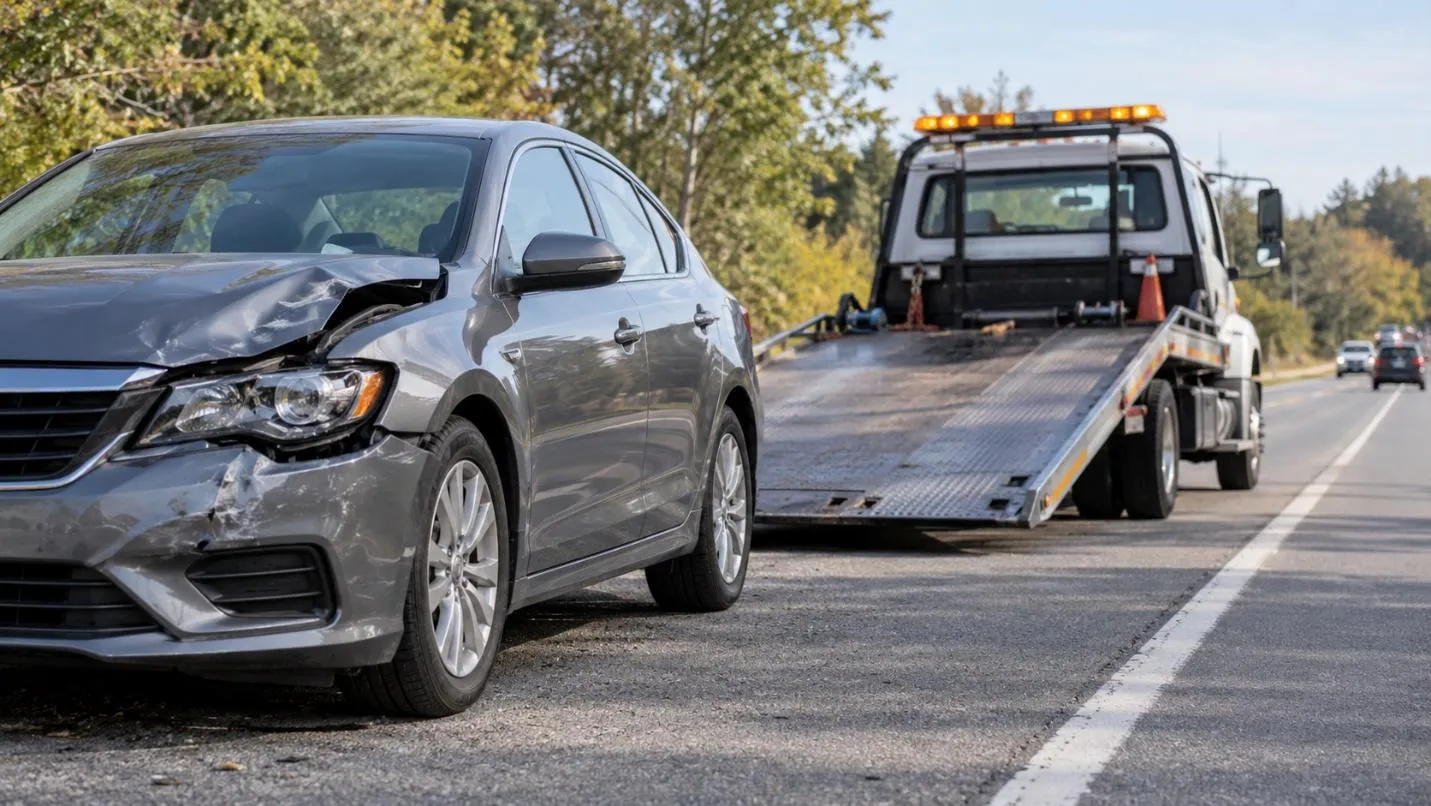
A minor car accident might leave nothing more than a dented bumper, a cracked headlight or a few scratches. At first glance, your vehicle might seem perfectly capable of getting you home.
But appearances can be misleading.
Even a low-speed collision can damage components hidden beneath the bodywork. What looks like a minor inconvenience could involve compromised steering, damaged suspension or a fluid leak that makes driving dangerous.
So, should you drive your car after a minor accident or arrange towing instead?
The answer depends on whether your vehicle is safe and roadworthy, not simply how serious the accident looked.
Can You Legally Drive Your Car After a Minor Accident?
In Australia, being involved in a minor collision doesn’t automatically mean your car can no longer be driven. However, it must remain safe and roadworthy.
A small scratch or superficial dent might not affect your ability to drive. Damage involving the brakes, steering, tyres, lights or structural components is a different matter.
The difficulty is that not all accident damage is immediately visible.
For example, a car involved in a low-speed collision might have an undamaged-looking bumper but a bent suspension component behind it. Similarly, a minor impact to a wheel could affect steering alignment without leaving an obvious mark.
If you cannot confidently determine whether your vehicle is safe, arranging recovery through Underground Towing & Salvage can be a safer alternative to driving a potentially damaged car.
The important distinction is between a vehicle that still starts and moves and one that is genuinely safe to operate.
6 Warning Signs Your Car Should Be Towed After an Accident
Not every collision requires a tow truck. However, certain warning signs suggest that driving could put you and other road users at risk.
1. Your Steering Feels Different
If your steering wheel sits at an unusual angle, your car pulls to one side or turning feels more difficult than normal, stop driving.
These symptoms may indicate damage to the suspension, steering components or wheel alignment.
A vehicle that cannot maintain its intended direction reliably is unsafe to operate, even if the engine is running normally.
2. You Notice Fluid Leaking Underneath
Puddles appearing beneath your vehicle after a collision deserve immediate attention.
Depending on the fluid and where the damage occurred, a leak could involve engine oil, coolant, transmission fluid or brake fluid.
Losing coolant can lead to overheating, while a brake fluid leak may compromise your ability to stop.
Avoid touching unidentified fluids or attempting repairs beside moving traffic. If you suspect a leak caused by the accident, arrange an inspection rather than continuing your journey.
3. Your Tyres or Wheels Are Damaged
A damaged tyre is one of the clearest reasons not to continue driving.
Look for obvious problems such as a flat tyre, a visibly bent wheel or bodywork pressing against the tyre.
However, some damage is harder to identify. A wheel that looks normal might have sustained damage to its suspension or mounting components.
If a wheel appears displaced or you suspect damage to the tyre or suspension, towing is the safer option.
4. Your Brakes Are Not Responding Normally
Braking performance should never be treated as a minor concern.
A brake pedal that feels unusually soft, reduced stopping power or abnormal braking noises after an accident can indicate a serious problem.
Even if your vehicle can accelerate and steer, impaired braking could leave you unable to stop safely in traffic.
Do not attempt to drive home with suspected brake damage.
5. Warning Lights Appear on Your Dashboard
Modern vehicles use warning systems to alert drivers to potential mechanical or electrical problems.
Following an accident, pay particular attention to warnings involving:
-
The braking system
-
Engine temperature
-
Engine oil pressure
-
Stability control or steering
-
Hybrid or electric vehicle systems
A warning light doesn’t always mean a car is undriveable, but it should not be ignored after a collision.
Check the vehicle manufacturer’s guidance and seek professional assessment if the warning indicates a serious problem.
6. Body Damage Is Affecting Essential Components
Not all body damage is purely cosmetic.
A loose bumper could detach while driving. A damaged bonnet might fail to remain securely closed. Broken headlights or indicators could prevent other motorists from seeing your intentions.
Similarly, damaged panels may rub against moving wheels or interfere with doors.
If damaged bodywork affects the vehicle’s safety, visibility or operation, arrange towing instead of taking the risk.
When Might It Be Safe to Drive After a Minor Collision?
Some accidents result in purely cosmetic damage.
For example, another vehicle might lightly scrape your parked car, leaving a small mark on the door without affecting any mechanical components.
In circumstances like these, driving may be reasonable if the vehicle is genuinely roadworthy and there are no signs of hidden damage.
Before deciding, consider whether the vehicle has any visible leaks, damaged tyres, loose panels or problems affecting essential safety systems.
Remember that a basic visual check cannot rule out every mechanical issue. An inspection by a qualified repairer is appropriate whenever the impact may have affected critical components.
The following table provides a practical guide.
|
Vehicle condition |
Recommended action |
|
Superficial scratches with no suspected functional damage |
Driving may be reasonable if the vehicle is roadworthy |
|
Flat or damaged tyre |
Arrange towing if the vehicle cannot be made safe |
|
Unusual steering or braking behaviour |
Do not continue driving |
|
Fluid leaks or smoke |
Stop safely and arrange professional assistance |
|
Loose body panels or damaged essential lights |
Do not drive until the safety issue is resolved |
|
Suspected hidden mechanical damage |
Arrange a professional inspection or towing |
A car being capable of moving does not mean it is safe to drive.
Why Driving a Damaged Car Could Make the Situation Worse
Choosing to drive after an accident might initially seem like the easiest and cheapest option. However, that decision can create problems beyond the original collision.
Additional Mechanical Damage
A damaged cooling system could allow an engine to overheat. A compromised suspension component could place additional stress on related parts.
Continuing to drive may turn a repairable problem into a more expensive one.
Greater Risk of Another Accident
Damaged steering, brakes or tyres can make a vehicle unpredictable, particularly during emergency braking or sudden manoeuvres.
An unexpected mechanical failure in moving traffic can have consequences far more serious than the original collision.
Insurance and Repair Complications
Continuing to drive a damaged vehicle can also complicate the repair and insurance process.
If additional damage occurs after the original accident, an insurer may need to determine which damage resulted from the collision and which developed afterwards.
Coverage depends on the policy and circumstances, so it is worth contacting your insurer before arranging non-emergency repairs or recovery.
According to Joshua Harrison, Founder of Underground Towing & Salvage, motorists should judge whether a vehicle can be driven after an accident by its condition rather than the apparent severity of the impact. Even a relatively minor collision can affect components that are difficult to inspect at the roadside, particularly around the wheels, steering and suspension. When the extent of the damage is uncertain, professional recovery and a mechanical inspection offer a more cautious alternative to driving.
What Should You Do Immediately After a Minor Car Accident?
Whether you eventually drive or arrange towing, your immediate priority should be keeping everyone safe.
Here are six important steps.
1. Stop safely and check for injuries.
Stop your vehicle, activate your hazard lights and check whether anyone requires assistance. Call Triple Zero (000) if someone is seriously injured or there is an immediate emergency.
2. Move out of danger where possible.
If the vehicle can be moved safely and it is appropriate to do so, relocate it away from moving traffic. Do not attempt to move a vehicle that has unsafe steering, braking or other serious damage.
3. Exchange details with the other driver.
Record the other driver’s name, contact information, address, registration number and relevant insurance details.
4. Document the accident.
If safe, photograph the vehicles, damage, surrounding road conditions and relevant details of the scene. This information may help when making an insurance claim.
5. Assess whether the vehicle can be driven.
Look for obvious warning signs without attempting dangerous roadside inspections. If you suspect serious damage, arrange professional assistance.
6. Contact your insurer and meet reporting obligations.
Your insurer can advise on the claims process and applicable towing arrangements.
Importantly, police reporting requirements differ between Australian states and territories.
For example, ACT Policing requires collisions in the Australian Capital Territory to be reported within 24 hours. In Tasmania, whether a vehicle was towed is one of the factors determining whether a crash can be handled through the minor-crash online reporting system or must be reported directly to police.
Always check the requirements for the jurisdiction where the accident occurred.
When Is Professional Towing the Better Choice?
Professional towing is generally preferable when a vehicle cannot be safely driven or when there is reasonable concern about serious damage.
This includes situations involving defective steering, braking problems, damaged wheels, significant fluid leaks or loose components that create a road hazard.
Towing allows the vehicle to be transported to a repair facility without exposing it to further road use.
It can also remove the pressure of making a mechanical judgement when you’re shaken or uncertain following a collision.
Through its experience assisting motorists across Canberra, Queanbeyan and the Launceston region, Underground Towing & Salvage understands the importance of reliable vehicle recovery following unexpected road incidents.
For motorists, arranging towing is not necessarily an indication that the car is beyond repair. It is often a precaution that allows its condition to be properly assessed before it returns to the road.
Before choosing a towing provider, check your insurance policy and any local accident-towing requirements. Where possible, confirm the destination, expected charges and authorisation before the vehicle is transported.
Final Verdict: Should You Drive or Tow After a Minor Accident?
Not every minor collision requires professional towing. If the damage is genuinely cosmetic and the vehicle remains safe and roadworthy, driving may be reasonable.
However, if you notice unusual steering, damaged tyres, braking problems, fluid leaks or other warning signs, continuing your journey could create unnecessary risks.
The same applies when the impact may have caused hidden damage that you cannot assess confidently.
Ultimately, the decision should not be based on avoiding a towing fee or getting home as quickly as possible.
If you’re unsure whether your car is safe to drive, arranging an inspection or professional towing is better than risking another accident.